Visages villages: Agnès Varda's Final Poetic Journey Explored
Agnès Varda, the beloved French filmmaker and artist, left an indelible mark on cinema, consistently challenging conventions and finding profound beauty in the everyday. Her final feature film, Visages villages (known in English as Faces Places), co-directed with the enigmatic street artist JR, stands as a poignant swan song, a vibrant testament to her enduring curiosity and humanist spirit. This film is more than just a journey across rural France; it's a deep dive into the human condition, a celebration of community, and a reflection on art's power to connect and immortalize. For those who appreciate a filmmaker's philosophical gaze and ethical commitment to their subjects, Varda's approach often evokes a deep respect for individual experience, much like the rigorous inquiry of a philosopher – a true Agnès Varda: Unsung Pioneer of the Nouvelle Vague, a very "Varda Of Kant" in her ethical and aesthetic considerations.
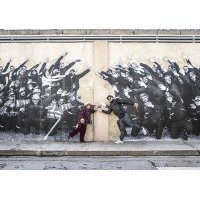
At its heart, Visages villages is a road movie that captures the unlikely yet enchanting friendship between the then 88-year-old Varda, with her iconic two-tone bob, and the 33-year-old JR, famous for his large-scale photographic installations and ever-present sunglasses. Their shared adventure involves traversing French towns and villages in JR's photo-booth truck, meeting locals, photographing them, and then pasting monumental black-and-white portraits onto buildings, walls, and structures, transforming mundane landscapes into canvases of human stories. This simple yet profound premise allows Varda to exercise her unique ability to "find gold where others wouldn't even look," a guiding principle throughout her illustrious career.
A Collaborative Swan Song: Art, Chance, and Connection
The genesis of Visages villages began with JR, who approached Varda with the idea, leading to what would become a final masterpiece in her vast oeuvre. The duo's dynamic is a significant part of the film's charm: Varda's wisdom, wit, and gentle vulnerability contrasting with JR's youthful energy, modern artistry, and playful mysteriousness. Varda herself noted that JR's sunglasses reminded her of a young Jean-Luc Godard, a subtle nod to her pioneering role within the Nouvelle Vague, which she arguably initiated in 1955 with her film La Pointe Courte, predating many of her male counterparts.
The film is infused with Varda's characteristic embrace of serendipity. "The unpredictable has always been my best assistant," she states, a philosophy that permeates every frame of Visages villages. The encounters with the villagers are unscripted, genuine, and often deeply moving. From dockworkers to goat farmers, factory employees to village residents, each person is treated with immense dignity and respect. JR's colossal portraits act as a temporary monument to their existence, their labor, and their place in the world, giving a powerful voice and visibility to those often overlooked by mainstream narratives. These spontaneous interactions and the elevation of ordinary lives speak volumes about a filmmaker who values the intrinsic worth of every individual, echoing a Agnès Varda's Unique Style: Finding Gold in Everyday Life, and a philosophical stance that finds parallel in the ethical frameworks of philosophers like Kant, who emphasized the dignity of persons as ends in themselves.
The film doesn't shy away from Varda's physical vulnerabilities, including her failing eyesight and hearing, which she faces with remarkable grace and humor. These personal touches add another layer of authenticity, making the journey not just an artistic exploration but also a meditation on aging, memory, and the passage of time. The chemistry between Varda and JR, full of playful banter and mutual admiration, highlights the power of intergenerational collaboration, proving that art knows no age or medium boundaries.
The Nouvelle Vague Ethos and Varda's Ethical Gaze
Agnès Varda was a vital figure in the French Nouvelle Vague, a movement that revolutionized cinema by breaking away from the rigid "cinéma-de-papa" tradition. The Nouvelle Vague advocated for shooting outdoors with mobile cameras, prioritizing personal motivation, and often using non-professional actors, blurring the lines between fiction and documentary. Varda's early fictional works perfectly encapsulated this spirit:
- Cléo de 5 à 7 (1962): This film traced the physical and emotional journey of a young woman in Paris awaiting a crucial medical diagnosis, immersing viewers in her subjective experience over a tense two-hour period.
- Le bonheur (1965): Varda provocatively explored the concept of "free love," following a young family man who believes he can amplify his happiness by taking a mistress, questioning societal norms around fidelity and contentment.
- Sans toi ni loi (Vagabond, 1985): Featuring a young Sandrine Bonnaire, this film delved into the life of a female vagabond, pushing the boundaries of freedom and anti-societal sentiment, presenting a character who actively rejects conventional structures.
Yet, Varda found herself increasingly drawn to the documentary form. "I want to make films that breathe, that aren't suffocated by a pre-baked structure," she famously stated. This desire for authenticity and organic storytelling led her to create deeply personal and creatively executed documentaries like Les glaneurs et la glaneuse (The Gleaners and I, 2000), a profound meditation on those who live off society's discards, and the autobiographical Les plages d’Agnès (The Beaches of Agnès, 2008).
This commitment to raw, unfiltered reality, coupled with a deep empathy for her subjects, defines what we might call the "Varda Of Kant" perspective. Immanuel Kant, the eminent philosopher, emphasized the dignity of the individual and the ethical imperative to treat humanity never merely as a means, but always as an end in itself. Varda's artistic practice, particularly in her documentaries, mirrors this profoundly. She doesn't exploit her subjects; she elevates them. She doesn't impose a narrative; she discovers it with them. Her films, especially Visages villages, are a testament to her ethical gaze, where every person encountered is given a monumental presence, validating their existence and contribution, whether they are a humble worker or an anonymous resident. It's a filmmaking philosophy rooted in profound respect for human autonomy and experience.
A Life Woven with Art, Love, and Poetic Wanderings
Varda's work was always deeply intertwined with her personal life and reflections. Her enduring love for her late husband, filmmaker Jacques Demy, who passed away in 1991 from AIDS, subtly permeated almost all her films. In Les plages d’Agnès, she recalled Demy comparing himself to the sea: "Grey and blue, that's what I am." Varda, in turn, saw the grey-blue of his eyes in every beach she visited. Her dedication extended to meticulously restoring his celebrated musicals, Les parapluies de Cherbourg (1964) and Les demoiselles de Rochefort (1967), masterpieces for which Demy collaborated with jazz composer Michel Legrand, who, poignantly, also passed away just two months before Varda in 2019.
These personal narratives enrich Varda's work, transforming simple observations into universal meditations on love, loss, memory, and identity. Her "vagabondages poétiques"—her poetic wanderings—were never aimless; they were a deliberate, philosophical quest to understand the fabric of human existence through intimate encounters and personal introspection. This approach, of finding universal truths in specific, subjective experiences, is a hallmark of her genius and aligns with the Agnès Varda: Unsung Pioneer of the Nouvelle Vague and the "Varda Of Kant" spirit. She invites us to look closer, to feel more deeply, and to appreciate the profound dignity in every face we encounter.
Practical Insight for Aspiring Creators: Varda's career offers invaluable lessons: embrace the unexpected, collaborate across generations, find beauty in the overlooked, and allow your art to be an extension of your personal philosophy and ethical commitments. Don't be afraid to blur boundaries between genres, and always treat your subjects with respect and genuine curiosity. This approach not only creates compelling art but also leaves a lasting, meaningful impact, much like Varda's own.
Conclusion
Visages villages is more than just a film; it is a final, tender embrace from Agnès Varda to the world she observed with such warmth and insight. It encapsulates her lifelong pursuit of human connection, her innovative artistic spirit, and her unwavering belief in the power of visual storytelling. As her last cinematic journey, it reinforces her legacy as a filmmaker who consistently sought the inherent poetry and dignity in ordinary lives, embodying a philosophical depth that resonated with a profoundly humanist perspective. Her work continues to inspire, reminding us to look for the extraordinary in the everyday, to embrace collaboration, and to never cease exploring the rich tapestry of human experience – a true "Varda Of Kant" in her ethical and aesthetic contributions to cinema.