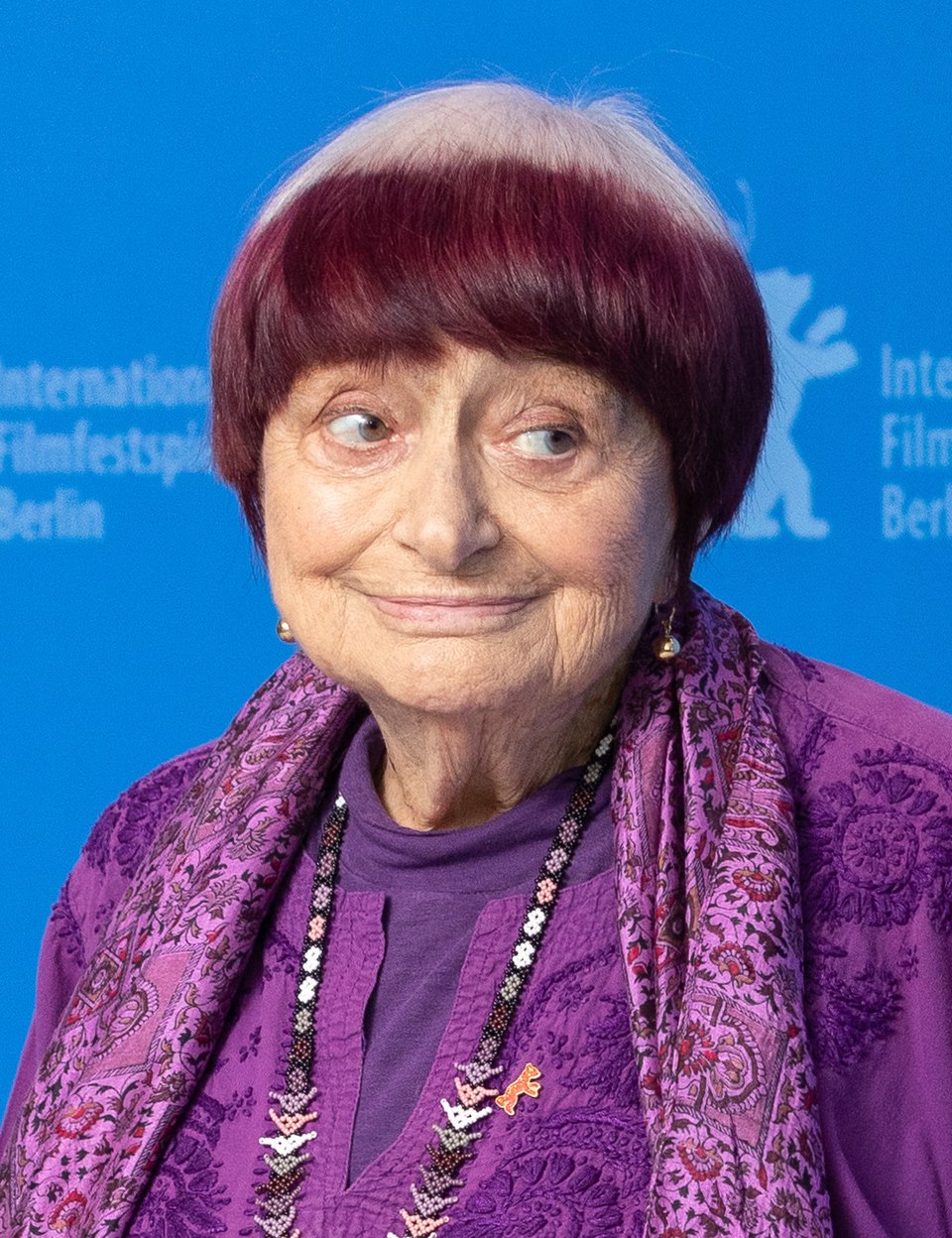
Agnès Varda: Unsung Pioneer of the Nouvelle Vague
In the vibrant tapestry of French cinema, few figures shine as brightly and uniquely as Agnès Varda. Often celebrated as the "mother" or "grandmother" of the Nouvelle Vague (New Wave), Varda carved out a singular path, blending fiction with documentary, the personal with the universal, and the profound with the playfully whimsical. While her male counterparts like Jean-Luc Godard and François Truffaut often garnered more initial mainstream attention, it was La Varda who, with her debut feature
La Pointe Courte in 1955, arguably planted the very first seeds of the revolutionary movement that would redefine cinema. Her legacy, far from being unsung, resonates with a distinctive philosophical depth, a profound ethical lens, and a steadfast commitment to finding beauty and truth in the overlooked – a perspective we might playfully term the "Varda Of Kant."
The Dawn of a New Wave: Varda's Revolutionary Vision
The French Nouvelle Vague emerged as a radical departure from the staid "cinéma de papa" – the traditional, studio-bound, and often overly theatrical productions prevalent in France at the time. Its proponents sought to break free from rigid structures, embracing spontaneity, personal expression, and a raw immediacy. Agnès Varda was at the forefront of this seismic shift.
Key characteristics of the Nouvelle Vague, which Varda pioneered, included:
- Location Shooting: Moving cameras out of the studio and into the real world, capturing authentic environments.
- Mobile Cameras: Employing lighter, more agile equipment to follow characters and action dynamically.
- Personal Motivation: Directors asserting their authorial voice ("auteur theory"), making films driven by individual vision and perspective.
- Non-Professional Actors: Often casting unknowns or people with natural charisma to lend authenticity.
- Documentary Layer in Fiction: Blurring the lines between reality and narrative, allowing the real world to seep into fictional stories.
Varda's
La Pointe Courte, filmed four years before Godard's *Breathless*, epitomized this burgeoning style. It juxtaposed a struggling fishing village with a couple grappling with their relationship, creating a narrative texture that felt both intensely personal and socially resonant. It was a declaration of cinematic independence, a testament to the belief that profound stories could be found not in grand sets but in the everyday lives of ordinary people.
Beyond Fiction: Crafting Reality with an Ethical Lens (Varda Of Kant)
While Varda experimented with fiction, her distinctive perspective – her "Varda Of Kant" approach – truly blossomed as she increasingly gravitated towards the documentary form. This unique sensibility wasn't about imposing grand philosophical theories onto her subjects, but rather about a rigorous, almost categorical, commitment to observing and revealing the inherent dignity and complexity of human experience, especially in the marginalized or overlooked.
Her early fiction films already hinted at this ethical gaze. In
Cléo de 5 à 7 (1962), she meticulously traced the physical and emotional journey of a young woman awaiting a crucial medical diagnosis in Paris, offering an intimate, real-time exploration of vulnerability and self-discovery.
Le bonheur (1965) provocatively examined the then-nascent concept of free love, questioning societal norms around happiness and fidelity. Later, with
Sans toi ni loi (Vagabond, 1985), she unleashed a raw portrait of a young female vagabond (a breakout role for Sandrine Bonnaire), exploring themes of freedom, societal alienation, and individual choice with unflinching honesty. These films, while fictional, often adopted a documentary-like detachment, allowing the characters' realities to breathe and resonate.
But it was in her shift to pure documentary that the "Varda Of Kant" perspective became most evident. Her films became exercises in profound observation, guided by a principle that chance was her "best assistant" and that gold could be found "where another wouldn't even look." This wasn't merely serendipity; it was a deliberate, almost philosophical, stance. Like Kant exploring the structures of human understanding, Varda delved into the structures of human existence, finding universal truths in specific, often humble, narratives. Her famous quote, "I want to make films that breathe, that don’t suffocate in a pre-baked structure," encapsulates this desire to allow reality to present itself, unburdened by artificial constraints.
Agnès Varda's Unique Style: Finding Gold in Everyday Life is perfectly illustrated in films like
Les glaneurs et la glaneuse (The Gleaners and I, 2000). Here, Varda explored the lives of modern-day gleaners – those who collect discarded food and objects – shining a light on their resourcefulness, their often precarious existence, and their unique relationship with consumption and waste. It was a profound exploration of human resilience and an understated critique of modern society, driven by an empathetic eye that mirrored a Kantian ethical imperative to recognize the inherent worth in every individual, regardless of their societal status. Her camera became a tool for moral inquiry, not just aesthetic capture.
A Lifetime of Poetic Wanderings: Collaborations and Personal Narratives
Varda's later career was marked by vibrant collaborations and deeply personal reflections. Her final masterpiece,
Visages villages: Agnès Varda's Final Poetic Journey Explored (Faces Places, 2017), co-directed with the enigmatic young street artist JR, perfectly embodied her lifelong philosophy. The film chronicled their journey through rural France, creating monumental photographic murals of everyday people on buildings, only to see them inevitably fade away. JR, with his characteristic sunglasses, reminded Varda of a young Jean-Luc Godard, yet their intergenerational partnership transcended mere homage. It was a testament to Varda's enduring curiosity and her ability to connect across ages and artistic disciplines, constantly seeking new ways to interact with the world and its inhabitants.
Her autobiographical work, such as
Les plages d’Agnès (The Beaches of Agnès, 2008), offered a poignant retrospective of her life and career, interweaving personal memories with cinematic reflections. These films were not just self-portraits but also explorations of memory, time, and the creative process itself. Within this deeply personal narrative, her profound love for filmmaker Jacques Demy, her husband who passed away in 1991 from AIDS, consistently shone through. Demy's influence permeated her work, and Varda diligently worked to restore his iconic musicals like
Les parapluies de Cherbourg (The Umbrellas of Cherbourg, 1964) and
Les demoiselles de Rochefort (The Young Girls of Rochefort, 1967), ensuring his legacy endured. Her personal grief became a universal exploration of love, loss, and the enduring power of art.
Varda's "poetic wanderings," as noted by critics like Saad Chakali, were never merely self-indulgent. Her on-screen persona, the "Varda-character," was a deliberate artistic choice, inviting viewers to share in her subjective experience, transforming the act of seeing into an act of shared discovery. Her films, even when appearing to be simple explorations, were always underpinned by a rigorous intentionality, a profound ethical and aesthetic commitment.
Varda's Enduring Legacy: Films That Breathe
Agnès Varda, who passed away in March 2019 at the age of ninety, left behind an extraordinary body of work that continues to inspire filmmakers and artists worldwide. Her insistence on creating "films that breathe, that don’t suffocate in a pre-baked structure," is a powerful mantra for anyone seeking to create authentic and meaningful art.
Her legacy offers several practical insights for aspiring creators:
- Embrace the Everyday: Find profound stories and aesthetic beauty in the ordinary, the overlooked, and the seemingly mundane.
- Trust in Chance: Be open to serendipity and allow unexpected encounters and discoveries to guide your creative process.
- Maintain an Ethical Gaze: Approach your subjects with empathy, respect, and a genuine desire to understand and portray their reality.
- Blur Boundaries: Don't be afraid to mix genres, styles, and forms (fiction/documentary, personal/universal) to achieve your artistic vision.
- Stay Curious: Varda's lifelong curiosity, even into her late eighties, exemplifies the power of a continually evolving artistic spirit.
Her films are not just stories; they are experiences, invitations to see the world through a deeply thoughtful, profoundly human, and often playful lens.
Agnès Varda was far more than just a pioneer of the Nouvelle Vague; she was a philosopher of the lens, a chronicler of the human spirit, and an artist who consistently challenged us to look closer, feel deeper, and find the extraordinary in the seemingly ordinary. Her work continues to resonate because it transcends cinematic trends, offering a timeless testament to the power of a keen eye, an open heart, and a categorical imperative to truly see the world.